
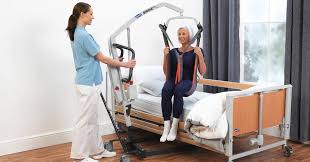
Care homes rely on hoists as essential equipment to safely transfer residents with limited mobility from beds to chairs, toilets, and bathing areas. These mechanical devices protect both residents and care staff from injury whilst maintaining dignity during transfers.
A hoist in a care home is a mechanical lifting device that safely transfers individuals with mobility challenges between different locations, reducing physical strain on caregivers and ensuring resident comfort. Modern care facilities use various types of hoists, including mobile units on wheels, ceiling-mounted track systems, and specialised bathing hoists to meet diverse resident needs.
Proper hoist usage requires careful assessment, appropriate training, and adherence to safety protocols to create a secure environment for everyone involved. Understanding how these devices work and when to use them helps care homes provide better support whilst promoting resident independence and wellbeing.
Key takeaways
- Hoists are mechanical devices that safely lift and transfer care home residents with mobility limitations between beds, chairs, and toilets.
- Different types of hoists serve specific purposes, from mobile units for general transfers to ceiling systems and specialised bathing equipment.
- Proper training, risk assessment, and following safety procedures ensure hoists protect both residents and care staff during transfers.
Understanding hoists in care homes
Hoists serve as essential lifting equipment in care facilities, helping residents with mobility challenges move safely between locations. These devices work alongside specialised components like slings and safety belts to protect both residents and carers during transfers.
Definition and purpose of hoists
A hoist is a mechanical device designed to lift and transfer people who cannot move independently. Care homes use these machines to help residents move from beds to chairs, wheelchairs, or bathrooms safely.
The primary purpose is preventing injuries during manual handling. Without hoists, carers risk back injuries when lifting residents manually. The equipment also protects residents from falls and uncomfortable transfers.
Key purposes include:
- Safe patient transfers between surfaces
- Reducing physical strain on care staff
- Maintaining resident dignity during moves
- Preventing manual handling accidents
Hoists eliminate the need for multiple carers to lift one person. This makes care more efficient whilst ensuring safety standards are met consistently across the facility.
Role of hoists in supporting limited mobility
Residents with limited mobility rely on hoists for daily activities they cannot perform alone. These devices enable safe movement for people with conditions like stroke, dementia, or physical disabilities.
Hoists support various mobility limitations including:
- Inability to stand from sitting positions
- Weakness in legs preventing weight bearing
- Balance problems that increase fall risk
- Severe arthritis limiting joint movement
The equipment allows residents to maintain some independence. They can participate in transfers rather than being completely passive during the process.
Care homes use hoists to move residents from beds to commodes, into baths, or between different seating areas. This maintains quality of life whilst ensuring safety throughout daily care routines.
Key components: slings, safety belts, and devices
Slings are fabric supports that cradle the resident during lifting. Different sling types serve specific purposes — general purpose slings for routine transfers, toileting slings for bathroom visits, and bathing slings for washing.
Slings must be properly fitted to each resident’s body shape and medical needs. Incorrect sling selection can cause discomfort or safety risks during transfers.
Safety belts and devices include:
- Spreader bars that distribute weight evenly
- Quick-release mechanisms for emergencies
- Safety locks preventing accidental lowering
- Control handsets with multiple speed settings
Regular inspection of all components is essential. Worn slings or damaged safety devices can lead to accidents during transfers.
Care staff must receive training on selecting appropriate slings for each resident and checking all safety devices before every use.
Types of hoists and handling equipment
Care homes use several types of hoists and handling equipment to safely move residents with mobility challenges. Each type serves specific purposes, from mobile units that move between rooms to specialised bath hoists for water transfers.
Mobile hoists and their applications
Mobile hoists are the most common lifting equipment in care environments. These portable units move on castors and can transfer between different rooms as needed.
Electric mobile hoists use battery power to lift residents. They reduce physical strain on care staff and provide smooth, controlled movements. Most care homes prefer electric models for their ease of use.
Hydraulic mobile hoists operate using a manual pump system. Staff must pump the handle to raise residents, which requires more physical effort but costs less than electric versions.
Mobile hoists work well for:
- Bed to wheelchair transfers
- Moving residents to toilet facilities
- Repositioning in chairs or beds
- Emergency lifts from the floor
These units typically support weights between 150kg to 200kg. They require adequate floor space to manoeuvre and work best on hard surfaces rather than thick carpets.
Ceiling hoists: features and suitability
Ceiling hoists mount on overhead tracks fixed to the ceiling structure. The motorised unit moves along rails to transfer residents between different points in a room.
Track systems can cover single rooms or connect multiple areas. Residents can move from bedrooms to bathrooms without using separate equipment. This reduces transfer times and staff effort.
Weight capacity often exceeds mobile hoists, with some models supporting up to 250kg. The overhead design allows lifting from floor level to greater heights than mobile alternatives.
Key benefits include:
- No floor space required for storage
- Smooth movement over any surface type
- Reduced manual handling for care staff
- Continuous transfers between connected rooms
Ceiling hoists suit care homes with limited floor space or residents requiring frequent transfers. Initial installation costs more than mobile hoists but provides long-term efficiency gains.
Stationary hoists: benefits and considerations
Stationary hoists remain fixed in specific locations within care facilities. These units provide dedicated lifting solutions for high-use areas like bathrooms or therapy rooms.
Standing hoists help residents who retain some leg strength to move from sitting to standing positions. They support the torso whilst residents use their legs to assist the movement.
Fixed-position hoists stay permanently mounted in one location. Care homes often install them near beds or in bathrooms where regular transfers occur.
Benefits include:
- Always available at specific locations
- Robust construction for frequent daily use
- Space-efficient design for dedicated areas
- Quick setup without moving equipment
Stationary hoists work best in care homes with predictable transfer patterns. They suit residents who need assistance in the same locations multiple times per day.
Bath hoists and special purpose equipment
Bath hoists provide safe water transfers for residents who cannot enter baths independently. These specialised units resist water damage and support wet environments.
Pool hoists lower residents into hydrotherapy pools or swimming facilities. They use waterproof components and often include battery backup systems for reliability.
Shower hoists help transfer residents into accessible shower areas. Many models fold against walls when not in use to save bathroom space.
Special features include:
- Corrosion-resistant materials for wet areas
- Quick-dry mesh slings for water activities
- Emergency lowering systems for power failures
- Compact storage options
Bath hoists require regular maintenance due to moisture exposure. Care homes should choose models with appropriate IP ratings for bathroom environments and ensure proper ventilation around storage areas.
Essential handling aids and transfer tools
Hoists work alongside several other handling aids to create safe transfer systems in care homes. These tools reduce manual lifting, protect both residents and staff, and make transfers smoother when used with hoisting equipment.
Slide sheets and transfer boards
Slide sheets reduce friction during bed-based movements and repositioning tasks. Made from low-friction materials, they slip between the resident and the mattress to help carers move people up the bed or turn them without lifting.
Care staff use slide sheets for lateral transfers between beds and trolleys. The sheets support the resident’s weight while allowing smooth movement across surfaces.
Transfer boards provide stable bridges between two surfaces of similar height. These rigid boards help residents move from bed to wheelchair or between chairs with minimal lifting required.
The boards work best when surfaces are at the same level. Residents with some upper body strength can use them independently, while others need carer assistance.
Both tools complement hoisting systems by handling smaller movements that don’t require full mechanical lifting.
Turntables and patient turners
Turntables help residents change direction whilst standing or sitting. These circular platforms rotate smoothly, allowing carers to position residents without manually turning them.
Standing turntables work well with stand-aid hoists during transfers. The resident stands on the platform, and carers can rotate them to face the correct direction for sitting.
Patient turners include specialised cushions and positioning aids that help residents rotate in bed. These tools reduce the physical strain on carers during repositioning tasks.
Some turntables have raised edges for foot placement and safety. Others fold flat for storage when not in use.
These devices prevent awkward twisting movements that can cause injury to both residents and care staff.
Wheelchairs and integration with hoisting
Wheelchairs must work seamlessly with hoisting systems for effective transfers. The chair’s arm rests, foot rests, and brake systems affect how safely residents can be moved.
Removable or swing-away arm rests allow hoist slings to position properly around the resident. Fixed arm rests can block sling placement and create unsafe transfer conditions.
Wheelchair brakes must engage reliably during hoist transfers to prevent the chair moving unexpectedly. Carers check brake function before every transfer involving hoisting equipment.
Key wheelchair features for hoisting compatibility:
- Removable arm rests and foot plates
- Reliable brake systems
- Appropriate seat height for hoist clearance
- Sturdy frame construction
Some wheelchairs have specific hoist attachments or compatibility features designed for care home use.
Assessment and care planning for safe hoisting
Proper assessment and care planning form the foundation of safe hoisting practices in care homes. Each resident requires an individual risk assessment and tailored care plan that specifies equipment needs and handling procedures.
Conducting a risk assessment
Risk assessments must be completed before any hoisting activities begin. These assessments evaluate the resident’s physical condition, mobility level, and specific needs.
Staff should assess the resident’s ability to understand instructions. They must also check for medical conditions that could affect safe transfers.
Key areas to evaluate include:
- Weight and height measurements
- Cognitive ability and communication skills
- Skin integrity and pressure sore risk
- Range of motion and muscle tone
- Previous injuries or medical conditions
The assessment should identify which type of hoist works best for each situation. It must specify whether transfers require one or two carers.
Environmental factors need consideration too. Room size, furniture placement, and floor surfaces all affect safe hoisting.
Developing individual care plans
Each resident needs a detailed care plan based on their risk assessment results. Care plans must specify exactly how manual handling should occur.
The plan should state which hoist to use for different activities. It must list the correct sling type and size for each resident.
Care plans should include:
- Specific equipment requirements
- Number of carers needed for transfers
- Step-by-step transfer instructions
- Times when hoisting should not occur
- Emergency procedures
Staff must review and update care plans regularly. Changes in the resident’s condition require immediate plan updates.
Care plans should be accessible to all staff members. Clear documentation prevents confusion during transfers.
Assessing hoist and sling compatibility
Proper equipment matching ensures safe transfers and resident comfort. Hoists and slings must be compatible with each other and suitable for the resident’s needs.
Weight limits require careful checking. The combined weight of resident and sling must not exceed the hoist’s maximum capacity.
Sling selection criteria:
- Correct size for resident’s measurements
- Appropriate fabric for skin condition
- Compatible attachment system (clip or loop)
- Suitable design for planned transfer type
Staff should inspect slings before each use. Frayed straps, worn fabric, or damaged attachments make slings unsafe.
Different transfer types may need different sling styles. General purpose slings work for most transfers, whilst toileting slings allow easier access for personal care.
Regular equipment servicing ensures ongoing compatibility and safety. Maintenance records should track inspection dates and any repairs needed.
Best practices and procedures for safe hoisting
Safe hoisting requires trained carers to follow specific procedures, clear communication between staff members, and properly maintained equipment that meets LOLER standards.
Safe working procedures and carer responsibilities
Trained carers must complete comprehensive training before operating any hoist equipment. This training covers proper sling selection, weight limits, and emergency procedures.
Carers should conduct pre-use equipment checks every time they use a hoist. They must inspect slings for tears, check battery levels on powered hoists, and ensure all moving parts operate smoothly.
Safe working procedures require carers to explain the process to residents before beginning transfers. This reduces anxiety and improves cooperation during the hoisting process.
Staff must select the correct sling type based on the resident’s mobility needs and body shape. Using an inappropriate sling can cause injury or discomfort to the person being moved.
Carers should position the hoist correctly before attaching slings. The equipment must be stable and have clear pathways for movement to prevent accidents.
Emergency procedures must be clearly understood by all staff. Carers need to know how to lower residents safely if equipment fails during a transfer.
Number of carers and communication protocols
Most hoisting operations require two trained carers working together for maximum safety. One carer operates the hoist controls whilst the other provides physical support and guidance.
The number of carers needed depends on the resident’s condition and the complexity of the transfer. Residents with challenging behaviour or complex medical needs may require additional staff members.
Clear communication protocols ensure smooth transfers. The lead carer should announce each step of the process, such as “lifting now” or “moving forward.”
Staff must establish who controls the hoist before beginning any transfer. Only one person should operate the controls to prevent confusion and potential accidents.
Verbal confirmation between carers helps maintain safety throughout the process. Both staff members should agree before starting, stopping, or changing direction during transfers.
Regular inspection and maintenance of equipment
LOLER (Lifting Operations and Lifting Equipment Regulations) requires thorough examinations of hoists every six months by competent persons. These inspections ensure equipment remains safe for use.
Daily visual checks by carers complement formal inspections. Staff should look for obvious damage, wear, or malfunction before each use.
Maintenance schedules must be strictly followed according to manufacturer guidelines. Regular servicing prevents equipment failure and extends the working life of hoists.
Faulty equipment must be removed from service immediately. Care homes should have backup hoists available to maintain resident care standards during repairs.
Records of all inspections and maintenance work must be kept for regulatory compliance. These documents demonstrate the care home’s commitment to safe hoisting practices.
Training and compliance in health and social care
Proper training ensures carers can safely operate hoists whilst meeting legal obligations under LOLER and other regulations. Care homes must establish comprehensive training programmes and maintain ongoing supervision to protect residents and staff.
Manual handling training for carers
All carers must complete thorough manual handling training before operating any hoist equipment. This training covers essential safety protocols and proper techniques for different types of hoists.
Training programmes should include:
- Risk assessment procedures for each resident
- Equipment inspection checks before use
- Sling selection and fitting techniques
- Emergency procedures when equipment fails
Trained carers learn to identify when hoisting is appropriate and when alternative methods are safer. They must understand each resident’s specific mobility needs and care plans.
Practical demonstrations are essential for building confidence. Carers should practice with different hoist types under supervision before working independently.
Refresher training should occur annually or when new equipment is introduced. This ensures carers stay current with best practices and safety updates.
Adhering to legal and regulatory requirements
Health and social care facilities must comply with the Lifting Operations and Lifting Equipment Regulations (LOLER) 1998. These regulations mandate regular inspections and maintenance of all lifting equipment.
LOLER inspections must occur every six months by a competent person. Care homes must keep detailed records of all inspections and maintenance activities.
The Provision and Use of Work Equipment Regulations (PUWER) also apply to hoist equipment. These require:
- Suitable equipment for the intended use
- Proper maintenance schedules
- Adequate training for all operators
- Clear operating procedures
Care Quality Commission (CQC) inspections assess compliance with these regulations. Non-compliance can result in enforcement action and potential closure.
Ensuring ongoing competency and supervision
Regular competency assessments ensure carers maintain safe hoisting practices. Supervisors should observe hoist operations and provide feedback on technique and safety.
Monthly spot checks help identify training gaps or unsafe practices. Care homes should document all supervision activities and follow-up actions.
New staff require extended supervision periods before working independently with hoists. This mentorship approach builds confidence whilst maintaining safety standards.
Incident reporting systems track any hoist-related accidents or near misses. These reports inform future training needs and equipment modifications.
Care managers should maintain training records for each carer, including initial certification and ongoing assessments.
Promoting independence and wellbeing with hoists
Hoists in care homes serve as essential tools for maintaining residents’ dignity whilst providing safe transfers. These devices enable greater autonomy by allowing residents to participate more actively in their daily care routines.
Supporting resident dignity and comfort
Manual lifting can be uncomfortable and intrusive for care home residents. Being shifted around by multiple carers often results in awkward positions and feelings of embarrassment.
Physical comfort improves significantly when using properly fitted slings and hoists. Residents experience less physical discomfort during transfers compared to manual handling methods.
The right sling size and type makes movements more dignified. This reduces the intrusive nature of transfers whilst protecting residents with sensitive skin or bruising concerns.
Privacy considerations become more manageable with hoists. Fewer carers are required for transfers, which helps maintain personal boundaries during intimate care tasks.
Residents who initially fear falling often become more comfortable with consistent, gentle hoist use. Clear communication throughout the process builds trust between carers and residents.
Standing hoists offer particular benefits for toileting tasks. These devices allow residents to remain partially upright, enabling them to participate more actively in personal care routines.
Enabling greater autonomy through safe use
Hoists provide residents with increased mobility options throughout care homes. They enable safe transfers from beds to wheelchairs, allowing access to dining areas and social spaces.
This improved mobility directly impacts mental health and social engagement. Residents can participate in communal meals, activities, and interactions with visitors when movement becomes easier.
Independence levels increase when residents understand the hoisting process. Familiar equipment and consistent techniques help residents feel more in control of their movements.
Some hoist types allow for user participation in the transfer process. This collaborative approach maintains a sense of agency rather than passive dependence on carers.
Regular access to different areas of the care home prevents social isolation. Residents can maintain relationships and engage in stimulating activities that support cognitive function.
The reliability of mechanical assistance gives residents confidence in their daily routines. This predictability helps reduce anxiety around movement and transfers.
Sources & references
- Lifting Operations and Lifting Equipment Regulations (LOLER) 1998
- Provision and Use of Work Equipment Regulations (PUWER)
- Care Quality Commission (CQC)
Make sure your team is trained in safe manual handling.
Explore the Manual Handling Training Course →
Mark writes about workplace health & safety, manual handling and accredited online training for Manual Handling Training, part of Online CPD Academy.