
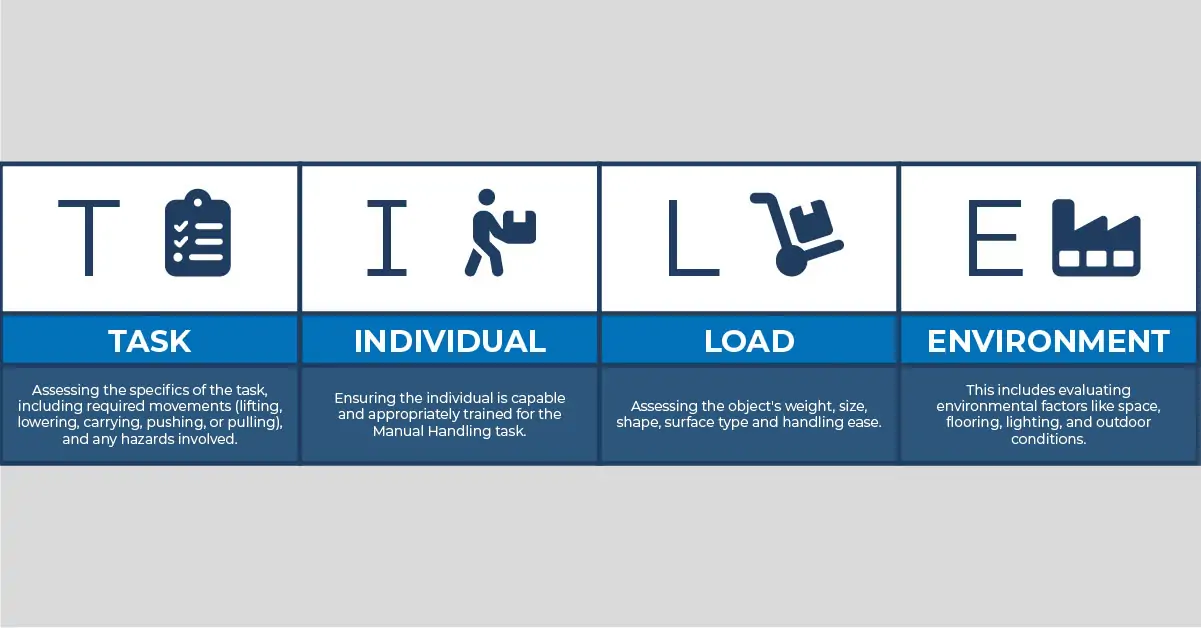
When people encounter the term “TILE” in workplace safety discussions, they often wonder what it means and why it matters. TILE stands for Task, Individual, Load, and Environment – four critical factors workers must assess before performing any manual handling activity. This simple acronym serves as a memory tool to help prevent workplace injuries and ensure safe lifting practices.
The TILE framework guides workers through a systematic risk assessment process. Each letter represents a key area to evaluate: the specific task being performed, the individual’s physical capabilities, the characteristics of the load being moved, and the environmental conditions surrounding the work area.
Understanding TILE can significantly improve workplace safety and reduce the risk of musculoskeletal injuries. Whether you’re working in healthcare, warehousing, or any job involving manual handling, mastering this acronym helps create safer work environments for everyone involved.
Key takeaways
- TILE is a safety acronym representing Task, Individual, Load, and Environment for manual handling risk assessments
- Each component of TILE helps identify specific hazards and safety considerations before lifting or moving objects
- Proper application of TILE principles reduces workplace injuries and ensures compliance with health and safety regulations
What does TILE stand for?
TILE primarily stands for Task, Individual, Load, and Environment in manual handling contexts, though the acronym appears in other industries with different meanings. The manual handling version helps workers assess risks when lifting, carrying, or moving objects safely.
TILE in manual handling
TILE serves as a risk assessment framework for manual handling activities in workplaces. Each letter represents a critical factor workers must consider before moving objects.
- T – Task refers to the specific activity being performed. Workers examine whether the task involves repetitive movements, awkward positions, or long distances. The task assessment looks at lifting, lowering, carrying, pushing, or pulling actions.
- I – Individual focuses on the person doing the work. This considers their strength, fitness level, and physical capabilities. Workers assess whether they need assistance or have any limitations that could affect safety.
- L – Load examines the object being moved. Key factors include weight, size, shape, and stability. Workers check if the load is bulky, difficult to grasp, or has an uneven weight distribution.
- E – Environment covers the workspace conditions. This includes lighting levels, floor surfaces, space constraints, and potential hazards. Workers identify slippery floors, narrow passages, or obstacles that could cause problems.
TILE as an acronym in other industries
TILE appears in various industries beyond manual handling, though these uses are less common. In technology sectors, TILE sometimes refers to different technical processes or systems.
The Texas Index for Level of Effort represents one alternative meaning in educational or assessment contexts. This version measures workload or difficulty levels in specific projects or tasks.
Gaming and software development occasionally use TILE to describe graphical elements or interface components. These applications focus on visual design rather than safety protocols.
Consumer products, particularly tracking devices, have popularised TILE as a brand name rather than an acronym. This usage differs entirely from the workplace safety context.
Expansion to TILEO and variations
TILEO extends the basic TILE framework by adding “Other factors” as a fifth consideration. This expanded version provides more comprehensive risk assessment capabilities for complex manual handling situations.
O – Other factors includes elements not covered by the original four categories. Personal protective equipment (PPE) requirements, time pressures, and weather conditions fall under this section. Workers consider how these additional factors might impact safety.
LITE offers an alternative arrangement of the same four elements. This acronym stands for Load, Individual, Task, and Environment, covering identical concepts in different order. Both TILE and LITE remain equally valid for workplace assessments.
Some organisations prefer LITE because it starts with the load assessment. Others favour TILE for its logical progression from task to environment. The choice depends on training preferences and company policies.
Breaking down the TILE acronym in manual handling
The TILE framework examines four essential elements that affect safety during manual handling tasks. Each component focuses on specific risk factors that workers and employers must evaluate before lifting, carrying, pushing, or pulling objects.
Task: analysing the manual handling activity
The task element examines the specific manual handling activities being performed. Workers must consider how often they repeat movements and whether the activity involves awkward positions.
Key task factors include:
- Frequency – How many times the activity occurs per hour or shift
- Duration – Length of time spent on continuous manual handling tasks
- Posture – Whether lifting requires bending, twisting, or reaching above shoulder height
- Distance – How far objects need to be moved or carried
Manual handling risk assessments should identify tasks that involve repetitive movements. These activities increase the chance of muscle strain and fatigue over time.
Strenuous movements like lifting from floor level or above head height create higher risks. Tasks requiring workers to hold loads away from their body also demand more physical effort.
Warning signs of risky tasks:
- Lifting more than 10 times per minute
- Carrying loads over 10 metres
- Working in cramped spaces
- Pushing or pulling for extended periods
Individual: assessing the person involved
The individual component focuses on the person performing manual handling activities. Physical capabilities and health conditions directly affect a worker’s ability to handle loads safely.
Age, fitness level, and previous injuries influence how much someone can safely lift. Pregnant workers, those with back problems, or recent surgery patients may need special considerations.
Individual factors to assess:
| Factor | Considerations |
|---|---|
| Physical strength | Can the person handle the required weight? |
| Health conditions | Any back problems, heart conditions, or pregnancy? |
| Experience level | Has the person received proper training? |
| Clothing | Does their uniform restrict movement? |
Training plays a crucial role in manual handling safety. Workers who understand proper lifting techniques reduce their risk of injury significantly.
Some employees may require assistance with certain manual handling tasks. Two-person lifts become necessary when loads exceed individual capabilities or when objects are awkward to grasp.
Load: considering the object or subject
The load refers to what is being moved during manual handling activities. Weight is important, but size, shape, and stability matter just as much for safety.
Heavy objects obviously create higher risks, but bulky items can be dangerous even when relatively light. Boxes that are difficult to grip or bags with shifting contents require extra caution.
Load characteristics to evaluate:
- Weight – Does it exceed safe lifting limits?
- Size and shape – Is it bulky or awkward to hold?
- Grip points – Are there proper handles or grip areas?
- Stability – Does the contents shift during movement?
- Temperature – Is it hot, cold, or slippery?
Manual handling risk assessments must consider how load characteristics combine with other factors. A moderately heavy box becomes much riskier when it lacks proper handles.
Sharp edges, rough surfaces, or contaminated materials add additional hazards. Workers need appropriate gloves and protective equipment for these loads.
Environment: evaluating surroundings and conditions
The environment encompasses all physical conditions where manual handling tasks take place. Poor lighting, uneven floors, and narrow spaces significantly increase accident risks.
Space constraints force workers into awkward positions during lifting activities. Doorways, low ceilings, and cluttered areas make safe manual handling much more difficult.
Environmental hazards include:
- Floor surfaces – Wet, uneven, or slippery conditions
- Lighting levels – Insufficient illumination for safe movement
- Temperature – Extreme heat or cold affecting worker performance
- Space limitations – Narrow corridors or low overhead clearance
- Obstacles – Steps, cables, or equipment blocking pathways
Weather conditions affect outdoor manual handling activities. Rain, ice, and strong winds create additional safety challenges that require proper planning.
Storage areas with poor ventilation or extreme temperatures make manual handling tasks more strenuous. Workers may fatigue more quickly in these conditions.
Essential environmental checks:
- Clear, well-lit pathways
- Non-slip flooring surfaces
- Adequate space for safe movement
- Proper temperature control
- Removal of trip hazards
Importance of TILE in manual handling safety
TILE serves as a critical framework for preventing workplace injuries by identifying hazards before they cause harm. This systematic approach reduces musculoskeletal disorders and ensures workers receive proper training in safe manual handling practices.
Risk reduction and injury prevention
The TILE framework helps employers identify potential dangers before workers get injured. By checking each element systematically, companies can spot problems early and fix them.
Task assessment reveals if workers need to lift too much or move things too often. These actions can cause back injuries and muscle strain. When employers find these risks, they can change how work gets done.
Individual evaluation looks at whether workers can safely do the job. Some people may need help or different equipment. This stops workers from trying tasks that are too hard for them.
Load analysis shows if objects are too heavy or awkward to move safely. Workers often get hurt when they cannot grip items properly or when loads shift unexpectedly.
Environment checks find hazards like wet floors or poor lighting. These conditions cause many workplace accidents. Fixing these problems prevents falls and other injuries.
Studies show that workplaces using TILE have fewer manual handling injuries. This saves money on sick leave and workers’ compensation claims.
The role of TILE in manual handling training
Manual handling training programmes use TILE to teach workers how to stay safe. The framework gives trainers a clear structure to follow when teaching lifting techniques.
Workers learn to check each TILE element before they start any manual handling task. This creates a habit of thinking about safety first.
Training courses show real examples of how to use TILE. Workers practice identifying risks in different situations. They learn when to ask for help or use lifting equipment.
Key training benefits include:
- Better understanding of lifting risks
- Improved decision-making about manual handling
- Increased use of proper lifting techniques
- More requests for help when needed
Employers must provide this training by law. TILE makes it easier to meet these legal requirements whilst keeping training practical and useful.
Impact on musculoskeletal health
Musculoskeletal disorders affect millions of UK workers each year. These injuries damage bones, muscles, and joints. TILE helps prevent these serious health problems.
Common manual handling injuries include:
- Lower back pain and disc problems
- Shoulder and neck strain
- Wrist and hand injuries
- Knee and ankle problems
The framework stops these injuries by addressing their main causes. Poor lifting techniques, heavy loads, and bad working conditions all contribute to musculoskeletal disorders.
When workers use TILE properly, they avoid dangerous lifting positions. They also recognise when loads are too heavy for one person. This reduces the stress on their bodies.
Research shows that systematic risk assessment cuts musculoskeletal injuries by up to 40%. Workers report less pain and take fewer sick days. This improves their quality of life and helps businesses run smoothly.
Early intervention through TILE assessment prevents minor problems from becoming serious injuries that need medical treatment.
Practical application of TILE in the workplace
Using TILE properly requires following specific steps to assess risks and create safer work environments. This framework helps employers reduce injuries and meet safety requirements through systematic evaluation.
Conducting a manual handling risk assessment
A proper manual handling risk assessment starts with examining each part of TILE systematically. Workers should first identify all manual handling tasks in their workplace, from lifting boxes to moving equipment.
Task assessment involves looking at the specific movements required. Does the job need twisting, bending, or reaching above shoulder height? How often must workers repeat these actions? Long distances and awkward positions increase risk levels.
Individual assessment checks if workers can safely complete the task. Consider their fitness levels, training, and any health conditions. Some people may need help or different equipment to work safely.
Load assessment examines what gets moved. Heavy items over 23kg need extra care. Sharp edges, hot surfaces, or unstable loads create additional dangers that require special handling methods.
Environment assessment reviews the work area conditions. Poor lighting, wet floors, narrow spaces, and obstacles all make manual handling more dangerous. Temperature extremes can also affect worker performance and safety.
Implementing safe manual handling practices
Once the assessment identifies risks, workplaces must put control measures in place. The best approach eliminates manual handling completely through mechanical aids like conveyor belts or hoists.
When elimination isn’t possible, reduce the risks through proper training programmes. Workers learn correct lifting techniques, team lifting methods, and how to use handling equipment safely.
Provide suitable equipment based on assessment findings. Trolleys, lifting belts, and grip aids help reduce strain on workers’ bodies. Regular equipment maintenance ensures everything works properly.
Create clear procedures for each manual handling task. Written instructions help workers remember the safest methods. Regular reviews keep these procedures up to date with workplace changes.
Monitor workplace conditions regularly. Floors should stay clean and dry, lighting must remain adequate, and walkways need clearing of obstacles. These simple steps prevent many handling accidents.
Other contexts and meanings for tile
The word “tile” extends far beyond its common construction meaning into technology, gaming, and educational fields. These applications range from Bluetooth tracking devices to computer interfaces and specialised learning frameworks.
Tile as a brand and consumer technology
Tile is a popular brand that makes small Bluetooth tracking devices. These devices help people find lost items like keys, wallets, or bags.
The Tile tracker uses Bluetooth Low Energy (BLE) technology to connect with smartphones. When an item goes missing, users can make the Tile device play a sound through their phone app.
Tile devices work within a network of other Tile users. If someone loses an item far from home, other Tile app users can help locate it without knowing they are helping.
Common Tile products include:
- Tile Mate (basic tracker)
- Tile Pro (longer range)
- Tile Slim (credit card size)
- Tile Sticker (smallest option)
The company offers subscription services for premium features. These include smart alerts, location history, and free battery replacements.
Tile in construction and materials
In construction, tiles refer to thin pieces of material used to cover surfaces. These materials protect and decorate floors, walls, and roofs.
Ceramic tiles are the most common type. They are made from clay and fired in kilns at high temperatures. These tiles work well in kitchens and bathrooms because they resist water.
Natural stone tiles include marble, granite, and slate. These tiles cost more but last longer than ceramic options. They give spaces a premium look.
Vinyl tiles offer a cheaper alternative to natural materials. Modern vinyl tiles can look like wood or stone. They are easier to install and maintain than traditional tiles.
Roof tiles protect buildings from weather. Clay and concrete roof tiles are popular in many countries. They last for decades when properly installed.
Tile in gaming, user interface, and mapping
In gaming and computer interfaces, tiles are small rectangular sections that display information or controls. This design makes screens easier to use and more organised.
Windows operating system uses live tiles on its start menu. These tiles show updates from apps without opening them. Users can resize and arrange tiles to fit their needs.
Mobile apps often use tile-based layouts. Weather apps show different cities as tiles. News apps display stories as tiles with headlines and images.
Video games frequently use tile-based graphics. Classic games like Tetris use falling tile pieces. Strategy games often use tile-based maps where each square represents different terrain.
Mapping applications divide areas into tiles for easier loading. Each tile contains a small section of the map. This system lets maps load quickly even with slow internet connections.
Tile in technical and educational settings
TILE stands for different technical and educational concepts depending on the field. These acronyms help professionals remember important processes and procedures.
Technology-Integrated Learning Environment (TILE) describes classrooms that blend traditional teaching with digital tools. These spaces include interactive whiteboards, tablets, and wireless networks.
In some technical fields, TILE refers to software frameworks or programming concepts. These systems organise data or processes into manageable sections.
Educational TILE concepts focus on active learning methods. Students work in groups using technology to solve problems. This approach moves away from traditional lecture-based teaching.
The acronym helps teachers and trainers remember key elements of modern education. It emphasises the importance of technology in learning environments.
Summary and key takeaways
TILE is a risk assessment tool used in manual handling. It helps workers and employers identify dangers before lifting, carrying, or moving objects.
The acronym stands for four key areas:
- T – Task (the activity being performed)
- I – Individual (the person doing the work)
- L – Load (the object being moved)
- E – Environment (the surrounding area)
Each letter reminds workers to check different risk factors. This systematic approach reduces workplace injuries.
TILEO adds a fifth element – Other factors. This includes personal protective equipment and additional considerations.
LITE uses the same four elements as TILE. The letters appear in different order but mean the same thing.
| Acronym | Elements |
|---|---|
| TILE | Task, Individual, Load, Environment |
| TILEO | Task, Individual, Load, Environment, Other |
| LITE | Load, Individual, Task, Environment |
These frameworks help prevent back injuries and muscle strains. They guide proper planning before manual handling tasks.
Workers should assess all four areas before lifting anything. This prevents most manual handling accidents.
The TILE method works for any manual handling situation. It applies to lifting boxes, moving equipment, or helping people.
Regular use of TILE assessments creates safer workplaces. Staff become more aware of potential risks.
Sources & references
- Health and Safety Executive (HSE) — Manual handling at work and the TILE / TILEO risk assessment framework
- Manual Handling Operations Regulations 1992 (as amended)
- HSE guidance L23 — Manual Handling Operations Regulations 1992: Guidance on Regulations
Related guides
- Manual Handling Risk Assessment Guide for Workplaces
- Manual Handling Weight Limits: UK Safe Lifting Guide
- Manual Handling Injuries: Key Risks & Prevention
- Hoists in Care Homes: Safe Moving & Handling Guide
- Construction Workplace Injury Statistics UK: 2026 Facts, Data & Key Insights
- Forklift Accident Statistics UK: 2026 Facts, Data & Key Insights
- RIDDOR Statistics UK: 2026 Facts, Data & Key Insights
Make sure your team is trained in safe manual handling.
Explore the Manual Handling Training Course →
Mark writes about workplace health & safety, manual handling and accredited online training for Manual Handling Training, part of Online CPD Academy.